Satisfaction is always two bow shots away,
And yet something in the soul prefers
This unreachable Lover to anyone reachable.
The One who knows all secrets is here now;
Nearer than your jugular vein.
(Rumi)
Feb. 7 – On a warm spring-like Saturday in February, 16 men gather in a living room in Oak Park, form a circle, join hands and dance.
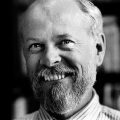
The place is the Shem Center for Interfaith Spirituality, and the facilitator is Br. Joe Kilikevice O.P.
The dances – from the Sufi tradition of the Mideast – are always in a circle, moving counter-clockwise. As they dance, the men sing chants from the Holy Qur’an to the beat of a drum. Laillaha il Allah: “There is nothing except the One.” Ishq Allah Mahbood Lillah: “God is love, lover, and beloved.” As the men move and sing-sometimes for 10 minutes at a stretch-they try to connect with God, themselves and the other men.
Kilikevice introduces most dances by reading from Rumi, a 13th-century Sufi poet:
This is now.
Now is all there is.
Don’t wait for Then;
strike the spark, light the fire.
Sit at the Beloved’s table,
Feast with gusto, drink your fill
then dance
the way branches
of jasmine and cypress
dance in a spring wind.
After each dance, silence. Following the silence, stories evoked by the dancing and singing and being together with other men are shared with those in the circle.
Kilikevice, who has been leading men’s retreats since 1986, describes this “male Spirit work” as countercultural. He contends our culture has led men away from authentic, honorable maleness. It has taught men how they should act, work and be-never cry, hold it in, you’re responsible, suck it up.
Br. Joe attempts to lead the men who attend his retreats away from this inauthentic way of being a man in our society and toward what might be described as “primitive wholeness.”
“Somewhere deep within the recesses of our souls,” he writes in the retreat brochure, “we can hear the stirring of sacred dance and song, a gift of our male ancestors that originates in the splendor and radiance of the starry night.”
“I’ve discovered,” Kilikevice says, “that when men come together and there’s privacy, safety and confidentiality, amazing things happen. Men go to some very wonderful places and are of the Spirit of God and make a difference when they go back into their everyday lives.”
In the brochure Kilikevice notes, “We claim the birthright of an honorable maleness when we remember the dance and song that celebrates our own courage, faithfulness, endurance, brotherhood, respect, affection, tenderness, passion, love, grief and goodness.”
You’ve been a bird without wings
in a house without doors or windows.
Ask. Step off into air like a baby pigeon
Strut proudly into sunlight,
not looking back.
(Rumi)
The 16 men dance, sing and keep silence from 10 in the morning until 4 in the afternoon, taking only one lengthy break for a vegetarian lunch. There are no lectures or discussions of concepts. The process is experiential. “Ours is not a cognitive/verbal path,” Kilikevice says. “Rather, we create ritual time and space that carries us to the intuitive and feeling places within that are deeper than words alone.”
Wives often ask Br. Joe if the men at a male Spirit retreat talk a lot about women. He tells them, on the contrary, the process is focused inward.
“Maleness,” he says, “is experienced and honored from within our gender, not focused on dependent and conflictual relationships with women.”
“I’ve come to these retreats before,” one retreatant concurs, “and I come to be with men who are awake and alive and living and loving and spiritual. It just does my male soul good to be in the company of these great men.”
One of the principles of the Shem Center is respect for all men – young or old, rich or poor, gay, straight, bisexual or questioning. The same goes for each man’s religious tradition.
The O.P. after Br. Joe’s name stands for Order of Preachers – Dominicans as they are commonly known. Though a Roman Catholic in good standing, he sees no conflict between his Catholic heritage and the use of traditions from the world’s other religions.
Kilikevice cites the following passage from Second Vatican Council documents (Vatican II, 1962-1965) to support his inclusive point of view:
He calls himself a pluralist without apology, observing that all the spokes in a wheel emerge from the center and move toward the center. “Christianity is one way,” he says, “but it is not the way for Muslims. It is not the way for Buddhists. The further we travel toward the center the more clearly we recognize we are all journeying toward the same goal.”
Br. Joe admits he might get in trouble for saying he is a pluralist, partly because, in his view, there is a movement in the church right now in the opposite, more conservative direction. That’s one advantage of being a brother and not a priest, he said.
“I fly for the most part under the radar.”
Even though most of the participants in his retreats are Roman Catholics like himself, his use of practices like the Zikr from the Sufi tradition in Islam on which the retreat process in February is based, are helpful in moving participants from their heads to their hearts.
At night I open the window
and ask the moon to come
and press its face against mine.
Breathe into me.
Close the language door,
and open the love window.
The moon won’t use the door,
only the window.
(Rumi)
“Theology is studying God, thinking about God,” Kilikevice explains. “Spirituality is experiencing God.”
Because spirituality is what the Shem Center is about, he doesn’t give lectures, much less sermons. Instead he uses spiritual practices like dance and the recitation of poetry and drumming to help the men in the circle feel the presence of God as the Beloved.
“When you call God the way a Muslim does – Allah which has the same linguistic root as the word for God in the Old Testament – notice what happens to you,” he said. “You don’t have to give up your own faith tradition to be enriched and blessed by the traditions of other people.”
Inspired by his participation in the Parliament of World Religions in 1993, Kilikevice organized the Shem Center – “Shem” in Aramaic means divine radiance. It is a 501c3 non-profit organization with four directors. The center is run on a financial shoestring. Revenues for the last fiscal year were $57,534 with expenditures totaling $58,281.
Kilikevice estimates that over the years thousands of men have participated in the retreats he has led. Numbers, however, don’t matter to him as much as the feedback he often gets. The wife of a participant in one of his men’s retreats, for example, sent him the follow note:
“Dear Joe, I don’t know what you guys did on that retreat, but I sure love who you sent back home to me.”
Shem Center for Interfaith Spirituality is located at 708 N. Harvey, Oak Park 60302 (708-848-1095, shemcenter@aol.com, www.shemcenter.org).