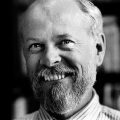
Vineyard’s request to Oak Park’s zoning board for permission to expand made news late last year. Perhaps the real story, however, is that in a time when many congregations in OPRF are declining in membership, Vineyard Oak Park needs to expand its facility because it is growing. We decided to find out why.
In the past 10 years, attendance at worship has grown from about 85 to between 400 and 450, and the pastoral staff has expanded to four full-time and three part-time ministers.
While Senior Pastor Dave Frederick is pleased that increasing numbers of people are coming to Vineyard, he insists that growth in numbers is not the congregation’s primary goal. “We don’t know how big we’ll grow,” he said. “We don’t have any control over that, but we do know that we have a responsibility to communicate the love and truth of God to everybody in this area over and over again.”
A few years ago, Rick Warren’s The Purpose-Driven Church was a bestseller (a sequel to The Purpose-Driven Life). Frederick and his staff seem to have read Warren’s book. The leadership at Vineyard, he noted, is convinced that God is calling them to “saturate Oak Park and the surrounding area with the love, truth and grace of God. Nothing changes a person’s life like a relationship with Jesus. Everything we do is focused on that.”
Now many churches in our area buy into that goal and may even have a mission statement that sounds very similar. What makes Vineyard Oak Park unique, according to Frederick, is not that they do anything that other churches aren’t doing. It’s the way his congregation puts the whole package together.
Wayne Fife, associate minister at Vineyard, explained that throughout the history of the Christian Church different movements have been known for certain emphases. For example, Pentecostals are big on the gifts of the Holy Spirit, while Quakers focus on peacemaking. Episcopalians emphasize liturgy, while Lutherans have a reputation for quality choral music.
Fife declared that in this time and in this place, the members of Vineyard “want it all.”
“Some people go for the Bible and some for the Holy Spirit,” he observed. “We want both. Some go for thinking and some go for emotional experience. We want both. There has been this division between head and heart, evangelism and social concerns and justice. We want both and don’t want to tone them down.”
In other words, some congregations identify themselves as Whole Gospel churches. Vineyard Oak Park might refer to itself as a Whole Kingdom, i.e. a fellowship of believers that wants to express all of the different ways in which the Kingdom of God can break into this world. According to Fife, when you put all the pieces together without compromising the integrity of any of them, “there’s a tremendous synergy.”
He gave the following example: When you read the Bible, you see God’s concern for the poor all over the text. But when you actually try to do something about poverty, you inevitably turn to prayer because the problems are just too big for mortals alone. But, he adds, you’re probably trying to address the issue of poverty with others, so relationships are being built. “We’re not willing to give up any of it.”
Hard to pigeonhole
If you visit the church at 705 Jackson Blvd. at 9:30 or 11 some Sunday morning, you will experience a congregation that is traditional in that they have communion every week, accept the historical creeds as valid summaries of faith, and who worship in a gothic-style building with stained glass windows. You will also participate in a service that is evangelical in the sense of having Bible-based preaching and a call for non-believers to give their lives to Christ.
You will at the same experience some aspects of Pentecostal worship like the laying on of hands and prayers for healing, a praise band (including electric guitars), and an emphasis on the gifts of the Holy Spirit. And along with all of that, you will hear talk about concern for the poor and social justice, being a PADS site, and becoming more ecologically aware-the stuff that liberal churches often champion.
One recent book that describes the Vineyard movement is titled, Quest For The Radical Middle. What that means, according to Frederick and Fife, is that Vineyard tries to do what many other churches do but in a radical way-a way that is in an intimate relationship with God through Jesus Christ.
And that’s a big word in the Vineyard Movement-relationships. “In all things we want to be REAL,” proclaims a Vineyard handout given to visitors. “Jesus’ example calls us to a radical life of faith.” The handout describes a trinity of relationships promoted by Vineyard: 1) Reaching Up, i.e. a relationship with God; 2) Reaching In, relationships with other believers in the fellowship; and 3) Reaching Out, relationships with those who don’t know God’s love.
Following are some of the testimonies which have been collected in a pamphlet titled, “The Vineyard Stories Book,” stories which illustrate what the congregation is trying to do.
“I had God in a box and He kept showing me that He was bigger than that,” said Laura Leonard, who loves participating in what Vineyard calls Fusion, where members of the congregation engage in organized acts of kindness, such as giving away things like bottles of water. “I was handing out Christmas cards, and someone said it was probably the only one he would get. I love blessing people with no strings attached,” Leonard said, “like God does with us.”
When Loren Holle went through four months of treatment for Burkitt’s Lymphoma, he and his was wife were prayed for and accompanied by Vineyard members the whole way. “We thank God that we were in a church that understood this experience-that He placed us so beautifully in a family who believed in seeking God for healing, understanding and encouragement,” he said.
“God has been working on my heart concerning the area of passivity,” said Patrick Donohue. “I am excited to walk as an active man of God who can have influence at work, home, and church.”
Sara, a woman who had been homeless and came to Vineyard through the PADS program, said, “This is the first time I feel like I fit in. They encourage you to come as you are. No one is judgmental. No one is looking down their noses. You can feel the Holy Spirit and the love.”
Leaving the city
Vineyard Oak Park came into being through a process of two congregations-Christ the King which met on North Avenue and the Vineyard fellowship on Belmont Avenue-deciding to merge and buy the former Nazarene Church building on Jackson Boulevard in Oak Park which they now call home. The process began in 1994 and was completed in 1997.
Vineyard Oak Park is part of the larger Vineyard movement which began in the mid-to-late 1970s. Frederick described the style and teaching of the movement as being basically evangelical but with an added emphasis on the work of the Holy Spirit. The movement was open to healing and other miracles of the Spirit, but in a way that was “more normal than” and “not weird” like some of the things people may have seen on TV. Frederick joked that Vineyard wouldn’t look good on television because they aren’t theatrical enough.
He uses the word “movement” intentionally. The association of over 500 Vineyard churches nationwide does have some structure to facilitate relationships, networking and leadership development, but each congregation has a great deal of autonomy. “I think every movement eventually becomes a denomination,” Frederick said, “but I think the desire of most leaders in the Vineyard is to keep that as far away as possible.”
Likewise, the leadership team at Vineyard Oak Park tries to give maximum freedom to individuals who are called to lead ministries. The leadership team works hard at providing direction for the congregation by setting annual and quarterly goals. But once individual leaders are on the same page, they are quite free to implement the grand strategy in ways they feel they are being led.
Both Fife and Frederick embody the can-do, pragmatic, Spirit-led style of Vineyard Oak Park. Neither have seminary degrees, although both have studied theology. Both did ministry on the West Side of Chicago and there bumped up against seemingly intractable problems. Both hungered for more power in their ministry and found it in being open to the work of the Holy Spirit. Both spent time away from paid ministry for years at a time and know what it’s like to work a secular job. Both have a passion for the hurting and the poor and both have a laid back personality.
If you have nice, neat categories in your mind for labeling churches, Vineyard Oak Park will give you some trouble. It blurs boundaries and breaks down stereotypes. It doesn’t fit neatly into evangelical, liturgical, Pentecostal or liberal clothing. It is an attempt to be something fresh and new and at the same time something as old as the Bible.