Has this ever happened to you? You arrive at the home of someone you don’t know?#34;say, you’re meeting the future in-laws for the first time. Your fiancee unlocks the front door, and you step into the house in which she grew up. The parents aren’t home yet, so you sit down in the living room and look around. You observe what pictures hang on the wall, which books are on the shelves, if there is a TV, what family pictures are on the piano, what magazines are on the coffee table. And you learn a lot about the parents without having met them.
That sort of the thing happened to me on Dec. 21. I’d been wanting to write a story about the Vajrayana Buddhist Center on Harrison Street, but none of my e-mails or phone calls had been answered. So I decided to make a personal visit. As I drove south on Austin Boulevard, Pat Cassidy and Felicia Middlebrook told me that the windchill was one below zero. I turned off of Austin at the gas stations and parked at 13 Harrison St.
I opened the front door, walked in and found no one there.
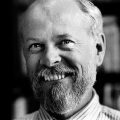
While waiting for someone to appear, I noticed, on a table near the door, an 8×10 picture of a 60-something monk dressed in a maroon and saffron robe. He wore a hint of a smile as if he knew something I didn’t know?#34;maybe knew something about me I didn’t know. An unlit votive candle stood in front of the picture. The name of the monk was Geshe Kelsang Gyatso.
My eyes drifted to the left of the picture to a large card with the picture of an assembly hall filled with about 200 monks and maybe 400 lay people seated behind them. Below the picture was a message from Gyatso:
Dear Resident Teacher and Center Students,
I would like to wish you all a Merry Christmas and Happy New Year. I hope everything will be auspicious for you and your Center in this forthcoming year. Thank you for all your dedication in your Dharma practice and for helping Dharma to flourish in your area.
With much love and prayers,
Geshe Kelsang Gyatso
“Hmm,” I thought, “a Buddhist wishing people a Merry Christmas. Sounds like he is trying to meet people where they are in their culture?#34;what Christian missionaries refer to as contextualization. And that term Dharma. I vaguely remember it from my world religions class in college. Have to look up its meaning when I get home.”
I was still alone. I decided to take my shoes off, place them in one of the 25 cubby holes to hold them and sat down in a comfortable wicker chair in the living room area just beyond the entryway. The floral-patterned area rug felt warm to stocking feet. I looked around. The walls were painted in an off-white and the room was decorated in a restrained, simple, tasteful way. “Sort of Scandanavian-Amish,” I found myself thinking.
Only four pictures hung on the walls: two were modern renderings of Buddhist mythological beings, one was some kind of Buddhist gathering and one depicted what liked like a modern temple. A cabinet contained gold Buddha statues, priced between $55 and $180. A 10-foot-long bookshelf contained 19 titles for sale along with several CDs.
Some of the books for sale at the Dharma Shop were titled:Universal Compassion
Understanding the Mind
Living Meaningfully, Dying Joyfully
Eight Steps to Happiness
How to Solve Our Human Problems
Transform Your LifeAs I looked more closely at the covers of the books, I realized that every one of them was written by Geshe Kelsang Gyatso. I began to understand that this monk’s teaching from the Kadampa School of Mahayana Buddhism is central to everything that goes on at the Vajrayana Center. In fact, the resident at the center, Gen Kelsang Khedrub, is a Western Buddhist monk who studied with Gyatso for 12 years.
For sale in the Dharma Shop was a boxed set of 20 CDs titled, Joyful Path of Good Fortune, The Complete Buddhist Path to Enlightenment, by, of course, Geshe Kelsang Gyatso.
By this time I had been in the Vajrayana Center by myself for 40 minutes … and I was feeling very comfortable. The space was attractive and inviting. One of the center’s brochures states, “Our full schedule of meditation classes, workshops, retreats, and the warm-hearted, friendly atmosphere here make us a strong and accessible spiritual community for those seeking a spiritual path. Everyone is welcome to attend classes, browse our bookshop, or simply drop by for a cup of tea.” From the way the space felt to me, even without people, I could believe it.
I spotted a tag board display near the bookshelves and wandered over. The display contained several pictures of people in old clothes working in the building. In the middle of the pictures was a sheet of paper with the title: A Gift for People in the Future, The 2006 Renovations of Vajrayana Buddhist Center. It revealed that the center purchased the three-storefront building in 2004 and is currently using only two thirds of the space. The renovations, estimated to cost $38,000, will make the remaining space useable. A new $4,000 shrine and large Buddha statue will also be purchased.
Like all religious communities, the center was using the display as part of a fundraising strategy. “We would like to do these renovations with as much volunteer help as possible,” I read, “both to keep costs down and to allow practitioners to create the rare and meaningful actions of preparing a Dharma Center for others to enjoy in the future.” There was the word Dharma again.
I walked into what looked like a combination meditation/lecture room. At the north end was a 4×4-foot platform about three feet high with a reading lamp. Flanking the platform were pine bookcases whose shelves held Buddha statues, vases with flowers, and other items like smooth stones which I took to be articles used in meditation or prayer.
I sat down on the off-white carpet toward the south end of the 60-foot-long room, back where the meditation benches, cushions and chairs were stacked. The furnace blower provided a kind of white noise which eliminated distracting sounds. The white translucent screens in the storefront windows kept the outside world from intruding. The skylight allowed the morning sun to bathe the off-white walls with light. I didn’t feel particularly religious, but I wanted to stay for awhile and enjoy the peaceful ambience of the place.
But I had been there for an hour by that time, alone the whole while, and I had Christmas shopping to do and errands to run, so I got up and headed for the door. I filled out a card to be put on their mailing list, dropped it in the box and headed out the door for the car. The cold made my body stiffen. I started the engine, flicked the turn signal and waited for one of the cars lined up at the intersection to let me get in line. I counted. Car number 20 had mercy on me and let me in. What a rude contrast to what I had just experienced.
As I drove north on Austin, I noticed statues of Mary and Joseph in a manger scene in front of St. Catherine/St. Lucy. At first, I thought Mary and Joseph looked cold. But no, I thought, after considering them for a minute. “I think they look like they are meditating and somehow that keeps them warm.”
When I got home, I pulled my book on Buddhism off the shelf and looked up Dharma. Ananda Coomaraswamy says that Dharma involves the four truths:
1) There is suffering.
2) Suffering has a cause.
3) The cause can be suppressed.
4) There is a way, a path, to accomplish this. The path leads one to the “annihilation of desire, letting it go, expelling it, separating oneself from it, giving it no room.”