
I recently learned about the concept of “epistemic humility.” It’s a fancy phrase for a simple idea: I might be wrong. It’s the awareness that our understanding is limited, and the willingness to question even our most strongly held beliefs. It means being humble in our perspective, cautious in what we claim, and curious enough to keep asking questions — especially of ourselves.
So what happens when that mindset is missing from our public life?
We’ve all seen it: public debate in Oak Park often leans toward certainty over curiosity. Whether it’s about bike lanes, new developments, or how we dispose of our leaves, our conversations too often collapse into loud assertions, sweeping generalizations, and personal anecdotes delivered as gospel truth.
One recent letter to the editor argued that the Madison Street bike lanes are a failure because the writer has only ever seen “seven total bicyclists riding in them.” (https://www.oakpark.com/2025/07/01/do-we-really-need-bike-lanes) They admitted they don’t regularly drive or ride on Madison, but added that a friend who does has “never” seen a cyclist either. That’s the extent of the evidence offered to argue that the lanes aren’t needed. (A pity they never saw me biking my daughters to and from preschool each morning on those very bike lanes — cute enough to charm any skeptic!)
This is what researchers call “anecdotal absolutism”: treating limited personal experience as objective fact. It ignores the presence of data, the experiences of others, and the complexity of public decisions. It reduces a shared public investment into a personal grievance.
And it has real consequences.
It makes those who voice alternative views feel unheard, their experiences dismissed. It puts the onus on them to keep defending their place in the conversation. When someone says, “Nobody wants this,” what they really mean is: I don’t want this, and I don’t want to consider that others might. That kind of dynamic doesn’t just stifle dialogue, it exhausts the people trying to participate in it. Goodness knows we parents of young children are exhausted enough already.
I’ve been guilty of this too. Of course I have! Embracing this level of humility is hard. We Oak Parkers are a passionate bunch, and I too have felt strongly about issues and spoken from a place of certainty. But I’m working on it because epistemic humility isn’t just good for debate; it’s good for community.
Robert Milstein recently exemplified epistemic humility in action in his response to Josh VanderBerg’s piece on housing development (https://www.oakpark.com/2025/07/15/equity-must-anchor-our-housing-solutions). He opens by acknowledging shared values, then raises thoughtful concerns without assuming his view is the only correct one. He focuses on policy, not personalities, and frames their perspectives as complementary rather than oppositional. Most importantly, he invites continued dialogue. His letter is a rare but powerful example of disagreement handled with care — grounded in shared purpose, informed by evidence, and open to collaboration.
These are values that help community conversation thrive. Let’s practice them more often.
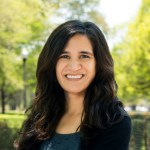
Nicole Chavas has lived in Oak Park for five years. She believes everyone’s perspective matters, no matter how long they’ve lived here.