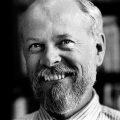


As Cardinal Francis George’s personal physician, Dr. Sheehan’s picture and voice became familiar to many in the Chicago area following the cardinal’s surgery at Loyola Medical Center in August.
Members of Ascension Catholic Church, however, knew him as Father Sheehan long before he gained media attention last month. In 1985 he became a Jesuit, and in 1994 Dr. Sheehan became Fr. Sheehan when he was ordained a priest. He helps out in the parish on weekends and lives in Oak Park with other Jesuits at their house on Clinton.
Impressive as his professional credentials may be, it is his willingness to expose himself as a vulnerable human being that endears him to his patients, students and parishioners.
He also gets emotionally involved with all his patients.
“I’m a real worrier,” he said, “so I worry about all my patients to the point where it’s sometimes hard for me to care for them because there are so many things going on [besides just the medical issues].”
Anne Dillon, who does media relations for Loyola Hospital, confirmed Sheehan’s fretting tendencies, noting, “I got to work with him a lot during the time that Cardinal George was here at Loyola for his bladder cancer surgery. Myles’ face was like a barometer of the Cardinal’s condition. If the Cardinal was doing well, Myles was his happy, joking self. If the Cardinal had a setback, Myles looked tired and spoke more quietly.”
Sheehan said he didn’t worry about the Cardinal more because of his position and celebrity. He tells a story about his father to explain why. His father, an anesthesiologist, was part of a team doing surgery on the mayor of Boston. Sheehan’s father responded to the medical team’s nervousness by saying, “Yes, it’s the mayor but let’s treat him the same way we would treat any bum.”
“He didn’t mean it in a disrespectful way,” Sheehan explained. “He meant it in the way 1940s people talked. The thing I always realize is don’t let the celebrity get in the way of your medical decision-making or you’ll hurt somebody.”
What he did experience was some anxiety about something going wrong and then having to go through the tiresome process of explaining what had happened to the media. He said that, in a way, when you’re taking care of the prelate, you’re taking care of the whole archdiocese.
When he caught himself second-guessing some of the easiest medical decisions he had made, he would relieve the pressure by saying to himself, “Oh to hell with it. There’s nothing you can do!”
Sean Cahill, now a physician at Loyola, began med school there at the time Sheehan joined the faculty. Cahill’s mother had died when he was in high school, so when he learned that Sheehan had just returned from his father’s funeral, he took the risk of approaching his professor and saying, “If you ever want to grab a beer and talk about your dad sometime, I’m around.”
“He actually took me up on the offer,” Cahill said, “and we went out for beers and got a little tipsy solving life’s problems and the mysteries of God’s plan for us all-particularly why people we love die.”
When Cahill’s father was diagnosed with cancer, he called his fiancee first and Sheehan second. “He had me over for a cold beer on his porch that night,” Cahill said, “and I turned to him during my dad’s illness constantly for advice, medically and ethically, as well as practically.”
Cahill’s story illustrates a characteristic that also comes through in Sheehan’s Ascension sermons.
Bridget Roth, a member of Ascension, said, “What intrigued me about Fr. Sheehan was, and still is, his homilies. What I see when he stands at the pulpit is a highly educated, highly intelligent man who is able to speak with instead of at the people he is addressing. There are no lectures, no fire and brimstone, no guilt trips. Instead there is a man standing there whose profound belief in Jesus is unmistakable. He is self-assured in that he is perfectly comfortable letting us in on the fact that he is as human as the rest of us and, in so doing, draws people to him.”
Sheehan explained that he attributes the effectiveness of his preaching in part to his Jesuit training. Jesuits are taught to look for God in the world around them, he noted, and their preaching should relate to what the average person would care about.
Science and religion vs. sloppy thinking
Part of what makes Sheehan’s personality and style so attractive to people may be that he has worked hard at integrating all of his varied aspects into a unified whole. As a doctor he has been taught to think scientifically. As a priest, he tries to see realities which cannot be proven empirically. About the apparent conflict between science and religion, the Doctor-Priest says a lot of it results from “sloppy thinking.”
“There is no conflict between true science and true religion,” he declared. “Saying that the only thing that is real is what you can measure is complete nonsense.”
He contends that Western culture has been sold “a bill of goods.” Empiricism is not the only measure of reality and the western world’s emphasis on empiricism has become idolatrous. Science is wonderful, he says, but it’s not the only way of discerning what’s real. Science and religion, according to this doctor-priest, should be, and are, complementary.
Though he admits he can’t explain in a neat, comprehensive way how God has been at work in the process of evolution or how the seeming randomness of nature dovetails with the notion of divine providence. But being able to observe life “bifocally” enlarges his ability to discern what is real.
He compares it to those paint-by-number sets we had as children. In the beginning all you have is black and white spaces and numbers, he observes, but when you add color it springs to life.
Dr. Sheehan also applies his bifocality to healing. There is, for example, presently an active discussion in the medical literature about the difference between “disease” and “illness.” He cited a man named Kleinman at Harvard who wrote that “disease is the biomedical grid we put on a person’s experience.”
Illness, on the other hand, Sheehan says, is all about what the patient is experiencing, and religion/spirituality/faith gives us a much better sense of what illness is. Medical science is very good at diagnosing and treating the body’s medical symptoms, but it cannot treat the whole person-the illness-without examining the spiritual dimension.
Taking his own advice
And he tries to apply all of this to himself as well.
“Myles is a priest-for me that means to follow Jesus Christ as a disciple,” he said, “but I exercise that by being a doctor. After awhile, we are not hyphenated people. We become one personality. I think it took awhile to get used to that, and like any kind of integration, there are some days when it comes off better than others.”
Dr. Sheehan is an internist with a specialization in geriatrics, which he claims has been a boon to his humility. One of the realities of working with the elderly is that all of your patients eventually die, and that has impressed on him the fact that sometimes there are problems you just can’t fix.
Sheehan brings his humble, down-to-earth style to bear on his teaching of ethics in the medical school at Loyola. One thing he dislikes about medical ethics textbooks is that they present “insanely difficult” dilemmas as the cases which students are to discuss, cases in which there is no right or wrong answer. Cases like this rarely arise, he argues, but what they do is give the impression that right and wrong don’t exist or can’t be deciphered.
“The medical issues I run into every day,” Sheehan said, “are things like a lack of civility and inattention just to basic human needs. A man sent me a check the other day for something we’re doing here at the medical school because I was visiting his elderly mother in her hospital room and noticed that she was not eating her food because she couldn’t see it, so I had someone start feeding her. Everyone gets off on feeding tubes, but no one looks to basic human decency.”
Dr. Sheehan wears a tie when he is working at Loyola. He wears a clerical collar when he is saying Mass at Ascension, and he wears neither when he is having a pint at Healy’s with some of his students. But that, he says, is how Jesuits are expected to behave. He quoted an early Jesuit leader who noted that the proper home for a Jesuit is out on the road, i.e. not cloistered in a monastery but out with the people.
Role modeling
But Sheehan says he acquired his mix of intellectual acuity, piety and humility from his mother, who was trained to be a Latin teacher, and his father, a physician.
“I didn’t realize at the time that my family was particularly religious,” he said. “It’s not like we were dropping to our knees and praying all the time.”
The Sheehan family did go to Mass every Sunday “no matter what,” but when they got back home, they would discuss what the priest had said in the homily over Sunday dinner instead of praying the rosary. His mother was an avid reader of theology, and she would bring what she was reading to their dinner table as well.
Sheehan keeps on his computer a picture of his father in a World War II military uniform standing next to a wounded German soldier he was treating. Sheehan said his father had a “fine religious sense” even though he came off as skeptical in discussions and had little patience for pompous clergy.
Afflicted by an extremely scrupulous conscience as an adolescent, Sheehan told his father once that he wanted to go to confession for something about which he was upset. When he told his father what it was that was bothering him, his dad began to laugh. All the more upset by his father’s reaction, Sheehan asked how he could laugh at something so personal.
His father replied that if he could laugh at what his son had done and not think it a terrible thing, then how did he think God was reacting. His father put his arm around his son and said, “Why do you think we call God ‘Father’? That’s the thing to remember. I don’t know about all this church stuff, but I do know about that.”
Perhaps it was from his father that Sheehan inherited his “loud and unrestrained” laugh. Dillon says his laugh is “as outrageous as his sense of humor.” It’s “wild and it’s out there,” she said, recognizable even in a large crowded room.
“We respect Myles as a Jesuit who is steadfast in his faith, a physician who has the gift to heal with medicine and faith, and a teacher who is willing to share his gifts,” said Roth. “Larry and I feel very happy to count Myles among our closest friends. His razor-sharp wit and wicked sense of humor always make for a hilarious dinner table.”
Cahill puts it another way: “Myles is quite a character. He is a complex mix of priest, physician and ‘guy you can grab a beer with.’ He is a great teacher and lecturer, but I think I have learned more from watching him lead his life outside the classroom than I learned from his as a lecturer. I guess that is true of the greatest teachers and mentors we encounter in life.”